Smart Capital Allocation Builds Strong Businesses → Day 376

Imagine you’re running a small chai shop in the bustling streets of Mumbai. You’ve got a steady flow of customers slurping your masala tea every morning, and one day, you hit the jackpot: a big loan from the bank to expand. Excited, you think, “Why not buy that shiny new scooter for deliveries and maybe a fancy air conditioner for the shop?” But wait, what if instead, you poured that money into buying better tea leaves, hiring an extra hand, or opening a second stall? That’s the heart of capital allocation, deciding where your hard-earned or borrowed rupees go in your business. Get it right, and your chai empire could rival the big coffee chains; get it wrong, and you might end up selling your scooter to pay the bills. It’s like playing a high-stakes game of Ludo with your money, where one bad move can send you back to start, broke and heartbroken.
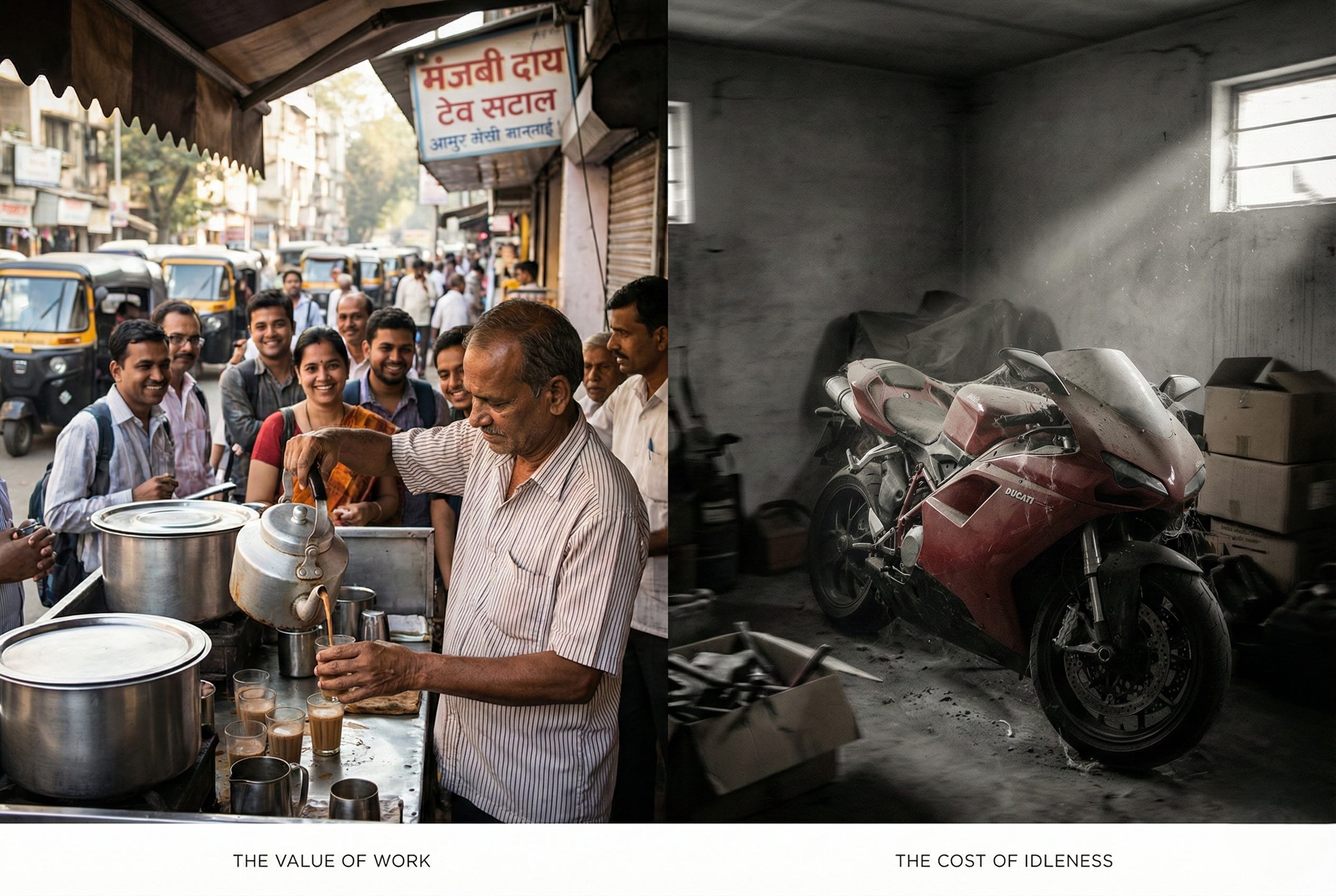
Now, picture this scary scenario:
Remember that uncle in your neighbourhood who started a garment store with dreams of becoming the next big tailor? He had some savings and took a loan, but instead of investing in quality fabric or a good sewing machine, he splurged on a flashy signboard and rented a posh space in a mall where footfall was as rare as rain in Rajasthan during summer. Within months, his shelves gathered dust, suppliers hounded him for payments, and poof, the shop shut down. He lost everything, including his family’s trust, and now he’s back to stitching shirts from home. This isn’t just a bedtime story to scare kids; it’s a real nightmare that happens to thousands of Indian businesses every year. Poor capital allocation is like feeding your money to a hungry ghost; it vanishes without a trace, leaving you haunted by debts and regrets. Businesses fail not because they don’t have money, but because they throw it at the wrong things, like chasing shiny distractions instead of building a solid foundation.
But let’s add a dash of humour to this horror show.
Think of capital allocation as your business’s diet plan. If you keep feeding it junk like unnecessary gadgets or over-the-top marketing stunts, your business gets bloated and sluggish, ready to collapse under its own weight. I once knew a guy in Delhi who owned a mobile repair shop. He got a windfall from a big order and decided to “invest” in a massive LED TV for the waiting area, thinking customers would love watching cricket while their phones got fixed. Funny thing? Most folks just wanted quick repairs, not IPL reruns. The TV gathered fingerprints, his rent piled up, and soon he was the one watching his dreams shatter like a dropped smartphone screen. On the flip side, good capital allocation is like giving your business a balanced thali, some for growth (like expanding inventory), some for emergencies (a rainy-day fund), and a bit for innovation (maybe online delivery apps). It’s hilarious how something as boring as “where to put your money” can turn a roadside dhaba into a chain like Haldiram’s, all because the owners didn’t waste rupees on frills.
The importance hits harder when you zoom out to bigger Indian businesses.
Take the scary tale of some airlines we’ve seen crash and burn, not literally, but financially. They poured crores into buying fancy planes without checking if routes were profitable or fuel costs manageable. Result? Massive losses, layoffs that left families in despair, and shareholders weeping over empty pockets. It’s frightening how one wrong decision can ripple out, affecting not just the owner but employees, suppliers, and even the local economy. In a country like India, where millions dream of starting their own ventures from street food carts in Kolkata to tech startups in Bangalore, ignoring capital allocation is like driving a scooter blindfolded on the highway. You might laugh at the thrill initially, but the crash is inevitable and painful. Yet, the funny part is, it’s all avoidable with a little common sense, like asking yourself, “Will this spend make more money or just make me look cool?”
Diving deeper,
Capital allocation keeps your business alive and kicking in tough times. India’s economy swings like a monsoon, sometimes flooding with opportunities, other times dry as a desert. If you’ve wisely allocated funds to cut costs during slowdowns, say by negotiating better deals with suppliers or training staff to multitask, your business survives while others drown. But mess it up, and you’re the horror story everyone whispers about at family gatherings: “Remember that cousin who blew his savings on imported machinery that broke down in a week?” It’s comical in hindsight, but terrifying when it’s your life savings on the line. Successful folks, like the owners of small kirana stores who pivoted to online during the pandemic, allocated smartly, putting money into apps and delivery boys instead of hoarding stock that might rot. They turned potential disaster into profit, proving that good decisions multiply your rupees like rabbits in a Bollywood comedy.
At its core,
Capital allocation is about choices that shape your business’s destiny. It’s not rocket science; it’s street smarts. In India, where every rupee counts, whether you’re a farmer in Punjab turning to agribusiness or a homemaker in Chennai starting a pickle empire, treating money like a precious family heirloom pays off. The scary truth? Ignore it, and your business becomes a ghost town, echoing with “what ifs.” The funny twist? Master it, and you’ll be the one laughing all the way to the bank, maybe even buying that scooter as a reward, not a regret. So, next time you’re eyeing that tempting expense, pause and think: Is this building my future or just a flashy detour? Your business and your peace of mind depend on it.